How much fibre do I need a day? Foods and how to eat more
Fibre fills you up, looks after your digestion and helps control cholesterol, yet hardly anyone eats enough. We tell you how much you need a day, which foods have the most and how to reach your target without supplements.

Key takeaways
- The WHO recommends at least 25 g of fibre a day.
- Beans, lentils, oats, fruit with the skin and vegetables are the best sources.
- Increase it slowly and drink water.
- It helps you feel full on fewer calories.
Article contents
What is fibre?
Fibre is the part of plant foods your body doesn’t digest. Even though it provides almost no calories, it does a lot: it fills you up, helps digestion and feeds the good bacteria in your gut.
- Soluble fibre: forms a kind of gel. It is in oats, beans and apples. It helps manage cholesterol and blood sugar.
- Insoluble fibre: adds bulk. It is in whole grains and skins. It helps prevent constipation.
How much fibre do you need a day?
The World Health Organization recommends that everyone over 10 eat at least 25 g of fibre a day from foods that naturally contain it. A large analysis of studies found the biggest benefits at 25 to 29 g or more.
Most people eat less. That is why in Pondera Health the fibre target starts at 25 g a day, and you can adjust it.
High-fibre foods
| Food | Serving | Fibre |
|---|---|---|
| Cooked beans | 1 cup | 15 g |
| Cooked lentils | 1 cup | 15 g |
| Pear with skin | 1 medium | 5–6 g |
| Cooked broccoli | 1 cup | 5 g |
| Apple with skin | 1 medium | 4 g |
| Cooked oatmeal | 1 cup | 4 g |
| Chia seeds | 1 tablespoon | 4 g |
| Almonds | 1 small handful (28 g) | 3–4 g |
| Corn tortilla | 1 tortilla | 1–2 g |
Values vary with the variety and how the food is prepared.
A day with 25 g of fibre
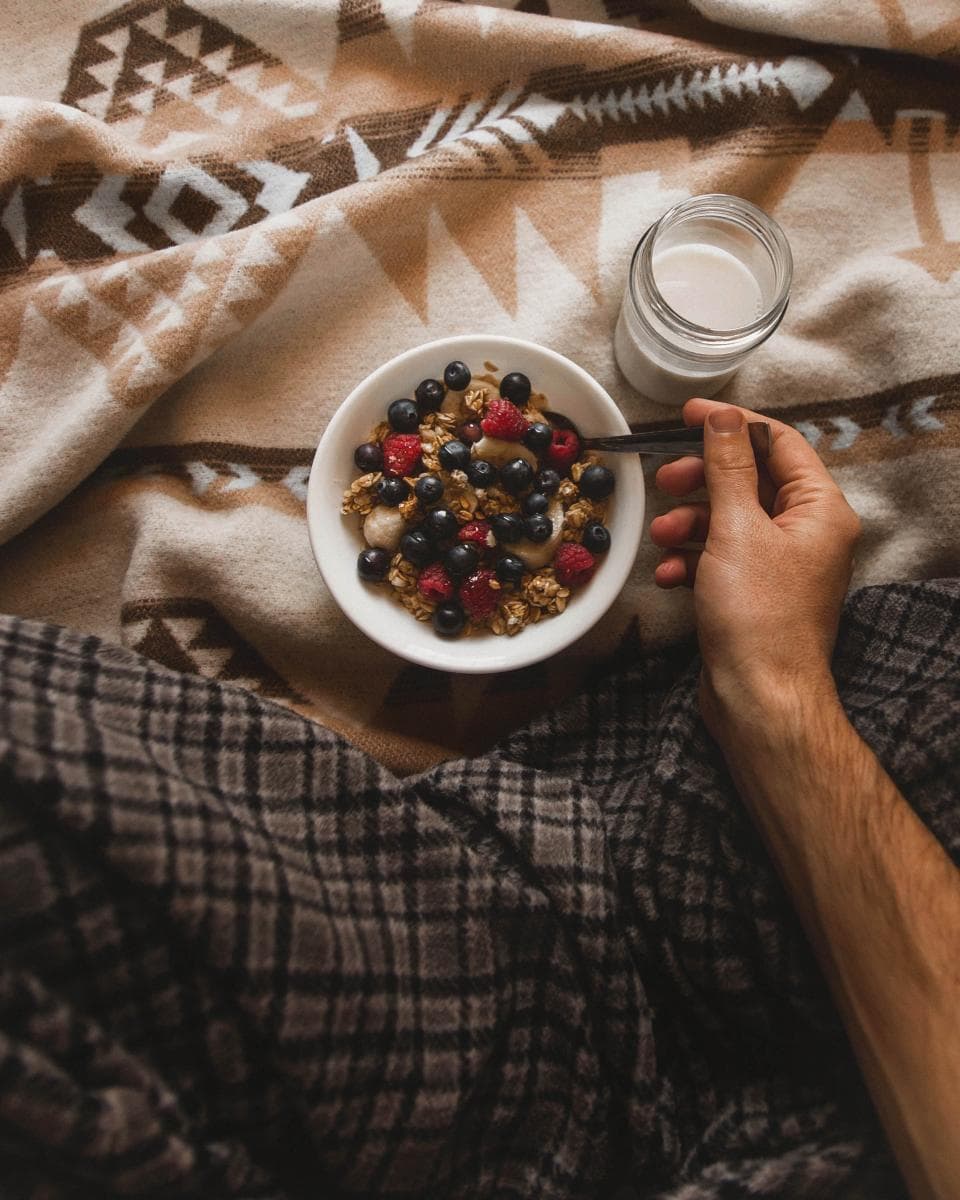
- Breakfast: oatmeal with a chopped apple (8 g).
- Lunch: a cup of beans with rice and a salad (17 g).
- Snack: a small handful of almonds (3 g).
Total: about 28 g, with no supplements.
Fibre and weight
High-fibre foods fill you up with fewer calories, so they help you keep a calorie deficit without going hungry. Pairing fibre with enough protein is one of the most effective ways to control appetite.
Frequently asked questions
How much fibre should I eat a day?
The World Health Organization recommends at least 25 g a day for everyone over 10.
Which food has the most fibre?
Legumes such as beans and lentils are among the highest: about 15 g per cooked cup.
Does fibre help with weight loss?
It helps you feel full on fewer calories, which makes a calorie deficit easier to keep.
Are fibre supplements better?
The recommendation is to get it from food, which also brings vitamins and minerals. A supplement can help in specific cases.
Sources
- World Health Organization. Healthy diet — Fact sheet. www.who.int/news-room/fact-sheets/detail/healthy-diet
- Reynolds A, Mann J, Cummings J, et al. Carbohydrate quality and human health: a series of systematic reviews and meta-analyses. Lancet. 2019;393(10170):434-445. doi.org/10.1016/S0140-6736(18)31809-9
- EFSA Panel on Dietetic Products, Nutrition and Allergies. Scientific Opinion on Dietary Reference Values for carbohydrates and dietary fibre. EFSA Journal. 2010;8(3):1462. doi.org/10.2903/j.efsa.2010.1462
We write nutrition guides with the same calculations and sources the app uses, cited at the end of each article.
This content is for information only and does not replace advice from a doctor or dietitian. If you have a health condition, are pregnant or take medication, check with a professional before changing how you eat.