What to eat before running: timing, examples and common mistakes
What you eat before a run changes how you feel during it. Too little leaves you without energy; too much, or something heavy, upsets your stomach. Here is what to eat, how long before, and how to hydrate, with simple examples.

Key takeaways
- Full meal 3–4 hours before; a light snack 1–2 hours before.
- Focus on easy-to-digest carbohydrates, low in fat and fibre.
- An easy run of under an hour can be done on an empty stomach.
- Never try new food on race day.
Article contents
Why what you eat before a run matters
When you run, your body mostly uses carbohydrates and fat for energy. Carbohydrates are stored in your muscles and liver as glycogen. Starting with those stores full gives you energy for your run, especially if it is long or hard.
What you eat also affects your stomach. Eating a lot, or something heavy, shortly before a run can cause nausea, a stitch or a rush to the toilet.
When to eat before running
The closer you are to your run, the smaller and simpler the food should be. This table is a good starting point:
| Time before | Type of food | Examples |
|---|---|---|
| 3–4 hours before | Full meal | Rice or pasta with chicken, or eggs on toast with fruit. Low in fat and fibre. |
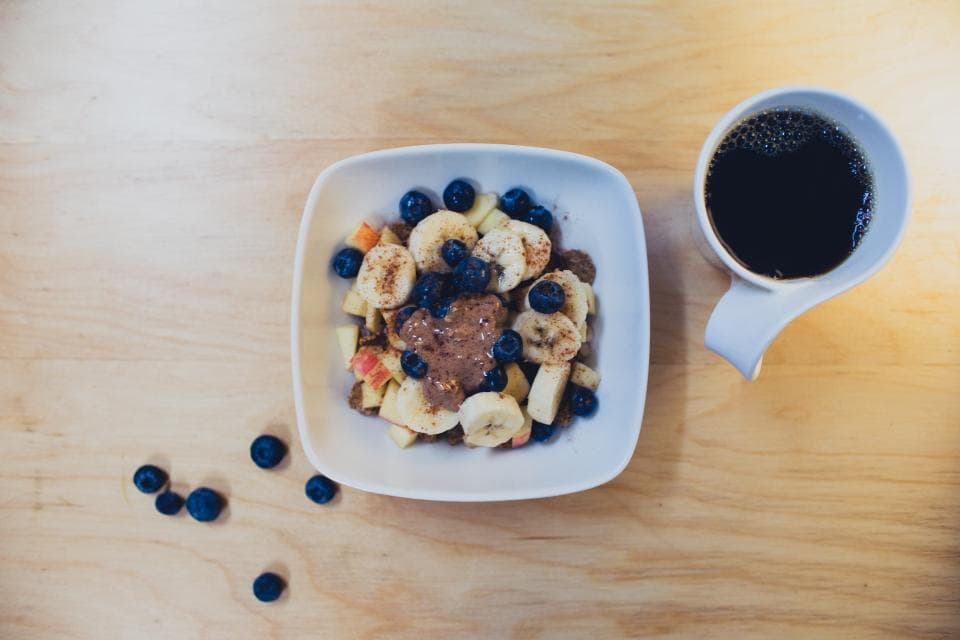
| 1–2 hours before | Light snack | Oats with banana, yogurt with fruit or toast with honey. |
| 30–60 minutes before | Small bite | A banana, a few crackers or a date. |
What to eat: easy-to-digest carbohydrates
Before a run, focus on:
- Carbohydrates: oats, bread, rice, tortillas, potatoes, bananas, honey.
- A little protein if you have more than an hour: yogurt, eggs or milk.
- Little fat and fibre: they digest slowly and can upset your stomach.
Right before a run, avoid fried food, very spicy food and high-fibre food like beans or big salads. They are not bad foods: they just take longer to digest.
Can you run on an empty stomach?
Yes, many people feel fine on an easy run of under an hour without breakfast. If you feel dizzy or low on energy, or you are doing intervals or a long run, eat something light first. If you have diabetes or another health condition, check with your doctor.
How to hydrate before running
Drink about 400–600 ml of water two or three hours before, and a little more if it is hot. That gives your body time to get rid of any extra before you start. In intense heat or on runs of more than an hour, add electrolytes.
Before a race
- Nothing new on race day. Repeat the breakfast you already tried in training.
- For a 5K or 10K, a normal breakfast 2–3 hours before is enough.
- For a half marathon or marathon, eat more carbohydrates for the two days before and take gels during the race. We explain it in our marathon training plan.
What to eat after running
After a long or hard run, eat something with carbohydrates and protein within two hours: for example, a banana milkshake, or rice with chicken. It refuels your energy and helps your muscles recover.
Frequently asked questions
How long before running should I eat?
A full meal 3 or 4 hours before. A light snack 1 or 2 hours before. And if you only have half an hour, a small bite such as a banana.
Is a banana good before running?
Yes. It is easy to digest, has carbohydrates and potassium, and you can eat it as little as 30 minutes before you start.
Is it bad to run on an empty stomach?
Not for a short, easy run if you feel fine. For intervals, long runs or if you feel dizzy, eat something light first.
What should I not eat before running?
Fried, very spicy or high-fibre food right before a run, because it takes longer to digest and can upset your stomach.
We write practical training guides with the same logic the app uses: measure first, assume nothing.
This content is for information only and does not replace advice from a doctor or coach. If you have an injury or a heart condition, or have not exercised in a while, check with a professional before starting a plan.