How to start running from scratch: a beginner’s guide and 8-week plan
Start running with an 8-week beginner plan and 3 sessions a week. Follow the run-walk schedule to build toward 30 minutes of continuous running.

Key takeaways
- Start with 3 days a week alternating running and walking.
- In 8 weeks you go from zero to 30 minutes of continuous running.
- Run at a conversational pace: if you can’t talk, slow down.
- Repeat a week if it feels hard; rushing is what causes injuries.
Article contents
Starting to run is easier than it looks — and easier to get wrong. Most people who quit in the first month don’t lack motivation: they go out too fast, on too many days in a row, and their body sends them the bill. This guide takes you from zero to running 30 minutes non-stop in 8 weeks, with a method that works precisely because it starts slowly.
Before you start: all you really need
Running is one of the cheapest sports there is, but three things are worth sorting out before your first run:
- A check-up if in doubt. If you are over 40 and have not exercised in a while, or you have a heart condition, high blood pressure, diabetes or a previous injury, see your doctor before you start.
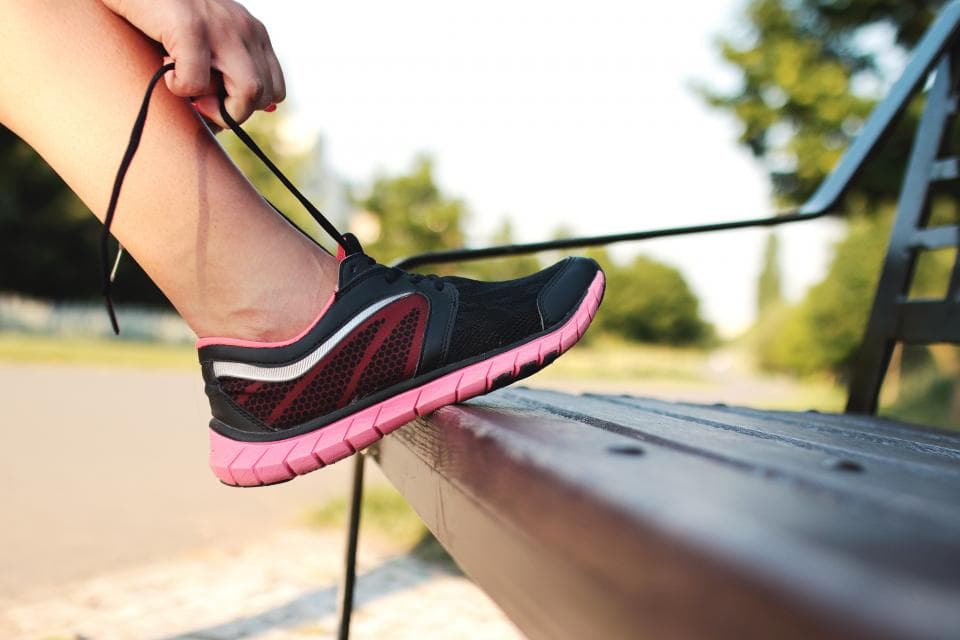
- Comfortable running shoes. You don’t need the most expensive pair. Look for shoes designed for running (not fashion or court shoes) that leave room for your toes and feel comfortable in the store. If you can, try them on in the afternoon, when your feet are slightly swollen.
- A realistic schedule. Three days a week, 30 minutes each. Pick the days now and book them like an appointment: consistency beats any perfect workout.
Everything else — a watch, technical clothing, headphones — helps, but is optional.
The run-walk method
The safest way to start is to alternate short running intervals with walking breaks. Walking is not cheating: it gives your heart, lungs, muscles and — above all — your tendons and bones time to adapt to the impact of running. Your cardiovascular system improves within a few weeks; tendons and bones take longer, and they are what gets injured when you add volume too quickly.
Each week the running interval grows while the walking break stays the same or gets shorter, until one day you no longer need it.
8-week beginner running plan
Run three times a week on non-consecutive days (for example Monday, Wednesday and Saturday). Walk briskly for 5 minutes before each session to warm up, and walk another 5 minutes afterwards to cool down.
| Week | Each session | Duration (excl. warm-up) |
|---|---|---|
| 1 | 8 × (1 min running + 2 min walking) | 24 min |
| 2 | 6 × (2 min running + 2 min walking) | 24 min |
| 3 | 5 × (3 min running + 2 min walking) | 25 min |
| 4 | 4 × (5 min running + 2 min walking) | 28 min |
| 5 | 3 × (8 min running + 2 min walking) | 30 min |
| 6 | 2 × (12 min running + 2 min walking) | 28 min |
| 7 | 2 × (15 min running + 1 min walking) | 32 min |
| 8 | 30 min of continuous running | 30 min |
How fast should you run?
Much slower than you think. When you are starting out, the most useful rule is the talk test: you should be able to speak in full sentences while you run. If you can only manage single words, slow down, even if it feels “too slow”. That comfortable, conversational pace is what builds your aerobic base.
Don’t worry about minutes per kilometre yet. Once you can run continuously and want to understand your numbers, our running pace guide explains how to work it out, and our guide to heart rate zones shows how to use your pulse to keep easy runs easy.
The most common beginner mistakes
1. Running too fast
Mistake number one. Every run turns into a race against the clock and you finish exhausted. Remember: almost all of your running should feel easy.
2. Increasing too soon
After two good weeks it is tempting to skip ahead. A sensible guideline is not to increase your weekly time or distance by more than about 10% from one week to the next. It is not an exact law, but it protects you from the sudden jumps behind most aches and pains.
3. Skipping rest
Your body gets fitter while it rests, not while you train. Rest days are part of the plan. If you want to move, walk, swim or cycle gently.
4. Ignoring pain
Feeling your muscles in the first few days is normal. A sharp, localised pain that gets worse as you run or makes you limp is not. If it appears, stop, rest for a few days and, if it doesn’t improve, see a physiotherapist or doctor.
Warm-up and strength: 15 minutes that prevent injuries
Two short strength sessions a week do more to prevent injuries than any amount of stretching. No gym required:
- Squats: 3 sets of 10–15.
- Lunges: 3 sets of 8 per leg.
- Calf raises: 3 sets of 15.
- Glute bridges: 3 sets of 12.
- Plank: 3 sets of 20–40 seconds.
Before running, swap long static stretches for a dynamic warm-up: brisk walking, hip circles and a few high knees.
Your next goal: a first 5K or 10K
Once you can run for 30 minutes without stopping, you can finish a 5K at an easy pace. It is the perfect moment to sign up for a race: having a date on the calendar is the best motivation to keep going.
And if you want to take the next step, our 10K training plan picks up right where this guide ends.
Frequently asked questions
How many days a week should a beginner run?
Three days a week on non-consecutive days is enough to progress while giving tendons and bones time to adapt. Once you can run 30 minutes comfortably you can add a fourth day.
Is it normal not to be able to run for even one minute?
Yes, and that is exactly what the run-walk method is for. If one minute is too much, start with 30 seconds of running and 2 minutes of walking. Consistency matters more than your starting point.
How long does it take to see progress from running?
Most people notice runs feeling easier after 2 to 4 weeks of regular training. Running 30 minutes non-stop usually takes about 8 weeks starting from zero.
Is it better to run in the morning or the evening?
The best time is the one you can stick to. In hot weather, running early or at dusk reduces the effect of the heat; beyond that it is personal preference.
We write practical training guides with the same logic the app uses: measure first, assume nothing.
This content is for information only and does not replace advice from a doctor or coach. If you have an injury or a heart condition, or have not exercised in a while, check with a professional before starting a plan.