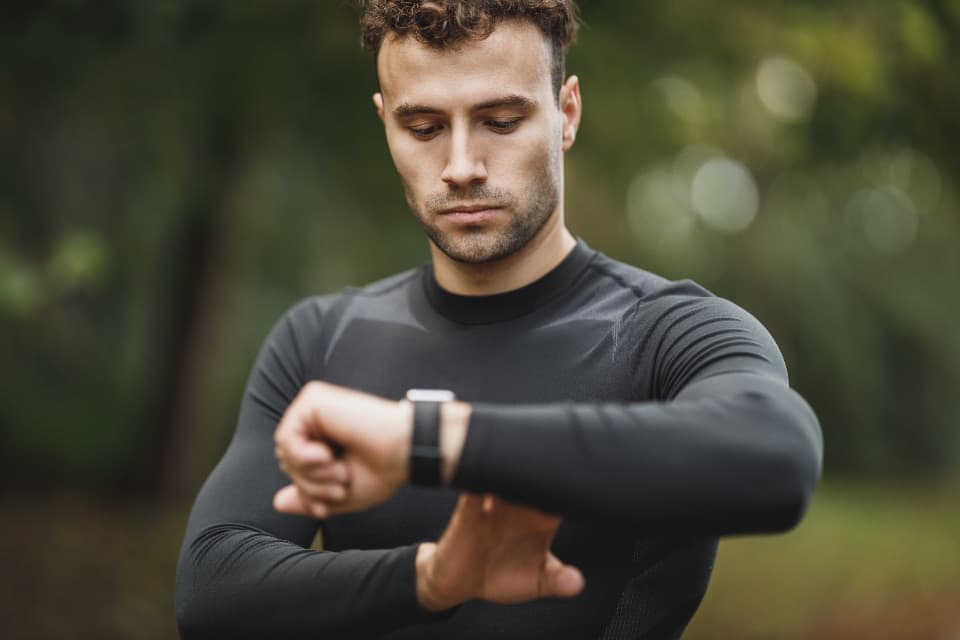
Heart rate variability (HRV) for runners: what it is and how to use it
Heart rate variability (HRV) is one of the best signs of how well you are recovering. We explain what it is, how it is measured, what lowers it and how to use it to decide whether today is a day to push or to back off.

Key takeaways
- HRV measures how much the time between heartbeats varies.
- Compare it only with your own usual value, not with others.
- Several days below your range are a signal to back off.
- Sleep, alcohol and stress move it as much as training does.
Article contents
What is heart rate variability?
Your heart does not beat like a metronome. Even at 60 beats per minute, the time between one beat and the next changes slightly: sometimes 0.98 seconds, sometimes 1.03. That variation is called heart rate variability, or HRV.
HRV reflects the state of your nervous system. In general, when you are well rested your variability is higher. When you are tired, stressed or ill, it tends to drop.
How it is measured
Most watches and rings measure it while you sleep, when your body is at its calmest and the reading is most stable. They usually show it in milliseconds (ms) using a calculation called RMSSD.
What lowers your HRV
- Hard sessions or several weeks of heavy training.
- Short or poor sleep.
- Alcohol, especially in the evening.
- Stress at work or at home.
- Coming down with an illness, sometimes before you notice symptoms.
- Heat, travel and time-zone changes.
How to use HRV in your training
The key is to compare today’s reading with your usual value, for example the average of the last few weeks:
- Within your normal range: train as planned.
- Below your range for one day: nothing serious. Do the session, but listen to how you feel.
- Below your range for several days: a good signal to back off. Swap intervals for an easy run or take a rest day.
Always look at HRV together with your sleep, your resting heart rate and how you feel. No single number decides for you.
How to improve your HRV
There are no tricks: HRV improves with the same habits that make you a better runner.
- Sleep 7 hours or more, at regular times.
- Run most of your miles at an easy pace.
- Respect the recovery weeks in your plan.
- Limit alcohol and eat dinner early.
To understand your training intensities better, read our guide to heart rate zones.
What HRV is not
HRV from a watch is a training tool, not a medical diagnosis. If you have palpitations, dizziness or chest pain, see a doctor even if your watch says everything is fine.
Frequently asked questions
What is a good heart rate variability?
There is no good number for everyone: it depends on your age, genetics and fitness. What helps is comparing today’s value with your average over the last few weeks.
Is a high or low HRV better?
In general, an HRV higher than your usual value points to good recovery, and a lower one suggests fatigue, stress or poor sleep.
When should HRV be measured?
It is most reliable during sleep or right after waking, at rest. That is why most watches calculate it overnight.
Can I train if my HRV is low?
One low day is no reason to stop. If it stays low for several days, swap hard sessions for easy runs or rest.
We write practical training guides with the same logic the app uses: measure first, assume nothing.
This content is for information only and does not replace advice from a doctor or coach. If you have an injury or a heart condition, or have not exercised in a while, check with a professional before starting a plan.